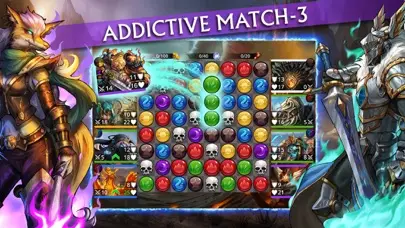
In a turn-based match game, the board is shared. Everything you do not take is available to your opponent immediately, which turns a single-player puzzle into something much closer to a card game.
The board is shared, and that changes everything
On a solo board, a match you do not take is still there next turn. On a turn-based board, it is a match your opponent may take instead. This one difference rewrites the value of every move, because you are no longer only asking what a move gains you, but what the resulting board offers to the other side.
A large clear that leaves three obvious matches lined up for the opponent is often a worse move than a small clear that leaves the board barren. Experienced players in these games spend as much attention on the board they are handing over as on the one they are playing.
The extra turn is the real currency
Most games in this shape grant an extra turn for certain matches, usually a match of four or more. Because turns alternate, an extra turn is not a small bonus: it is a doubling of your share of the board for that round. Chaining two or three extra turns together can decide a match outright.
The practical consequence is that a move producing an extra turn is almost always better than a larger move that does not. Players arriving from solo puzzles consistently undervalue this, because in a solo game the only thing that matters is what the move clears.
Feeding the meters that matter
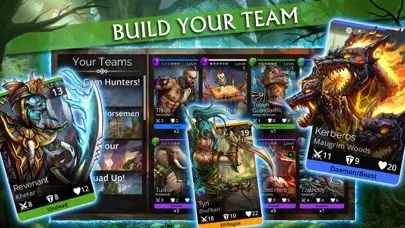
Matching a colour normally charges an ability tied to that colour. So the question is never simply what is available, it is which of your abilities is closest to ready and whether the board can get it there this turn.
Two rules cover most decisions. Charge the ability that ends the match rather than the one that helps a little, because a half-charged useful ability beats a fully charged marginal one. And do not overfill: matches beyond a full meter are usually wasted, so once an ability is ready, spend it before feeding it further.
Before each move, ask which single colour you would most like to deny the opponent. On tight boards, taking that colour badly is often better than taking your own best colour well.
When the board is against you
Sometimes the board simply offers your opponent everything and you nothing. This is genuinely bad luck rather than bad play, and the useful response is damage limitation: take the move that most disrupts the clusters your opponent needs, even if it gains you very little, and wait for the board to turn over.
Refills are random, and a board that is hostile for two turns is usually not hostile for five. The mistake is to make a large greedy match in the middle of a bad stretch, because it produces exactly the kind of large refill that gives the opponent a strong position.
What carries over from solo boards
Gravity is unchanged: tiles fall vertically, refills enter from the top, and clearing low disturbs more of the board than clearing high. But the interpretation flips. Disturbing a lot of the board is good in a solo game because it produces cascades for you; here it produces an unpredictable board for whoever moves next, which may well be your opponent.
The rule of thumb that emerges: when ahead, keep the board quiet and predictable. When behind, stir it up. Variance helps whoever is losing, which is true of most games and unusually visible in this one.
A note on pacing and events
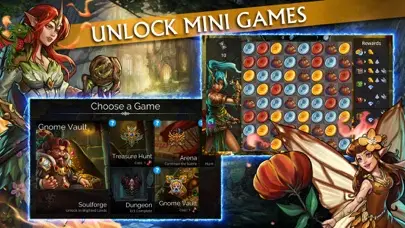
Games of this type usually attach their turn-based mode to a schedule of events with entry requirements and rewards. That is a separate design layer from the board itself, and it is where most of the spending pressure sits. It is covered in the guide on daily events and streaks, which is worth reading before committing to a long event rather than halfway through one.